%20(1).webp)
ere is the truth nobody tells you when you get engaged: the wedding itself takes one day. The planning takes everything before it. How long you need depends on the wedding you want, the vendors you are dreaming of, and how much breathing room you want between decisions. This guide breaks it all down so you can stop guessing and start planning with confidence.
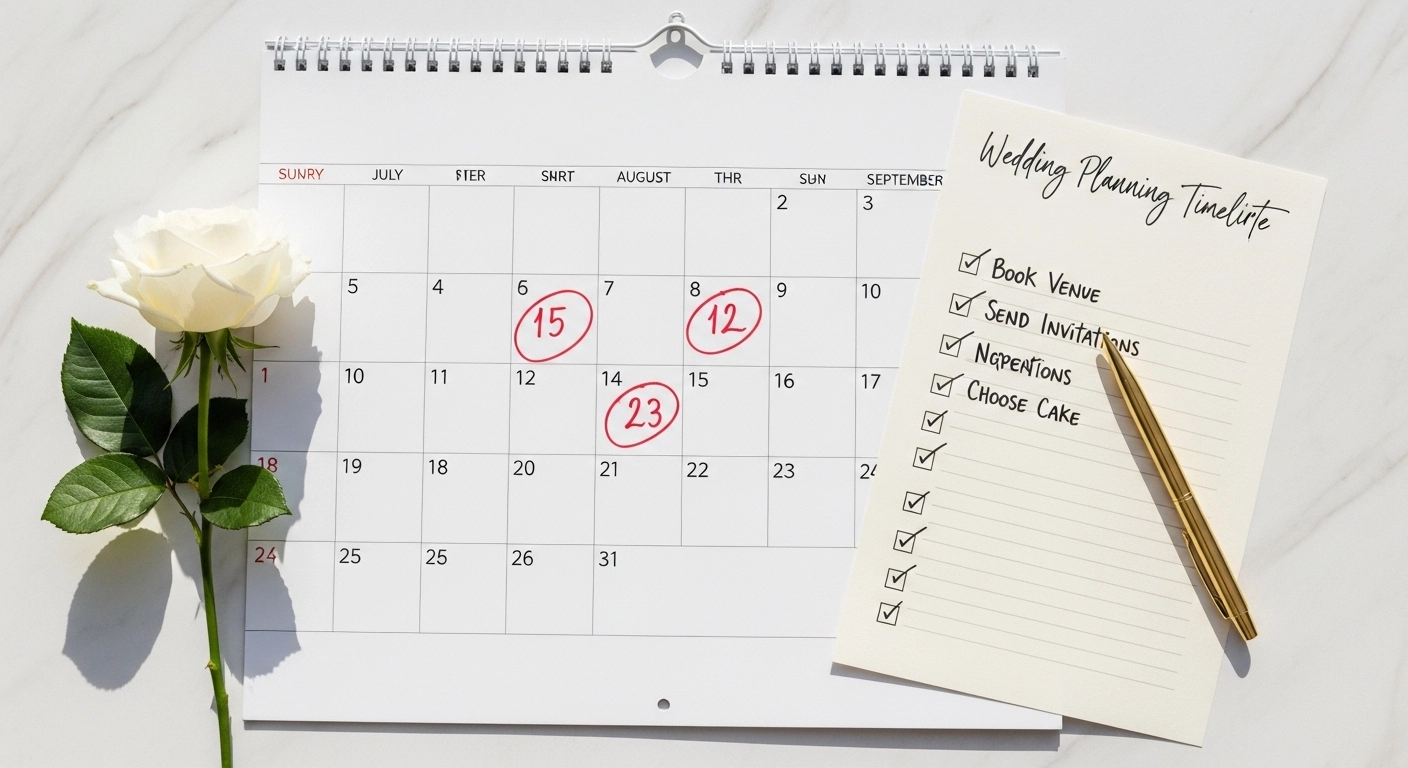
Most wedding professionals recommend starting the planning process at least 12 to 18 months before your wedding date. This gives you enough time to secure your preferred venue, book the best vendors.
This is the most popular timeline for a reason. You have maximum choice over venues and vendors, plenty of time to make decisions without pressure, and no risk of your first choices already being taken.
Still very achievable for most weddings. You will need to move quickly on the big decisions venue and key vendors especially but there is still enough time to plan everything properly without feeling rushed.
Works well for smaller weddings or couples with a clear vision. Some popular venues may already be booked but a beautiful and memorable wedding is absolutely still possible.
Requires quick decisions and a flexible mindset. Prioritise the things that matter most to you, let go of the things that do not, and you can still pull off a wonderful day.
Stressful but not impossible. Smaller guest lists, off-peak dates, and weekday weddings all make shorter timelines much more achievable. Focus only on what truly matters.
No two weddings take the same amount of time to plan. Several things directly affect how long the process takes and understanding them helps you set realistic expectations from the start.
Your venue is the biggest factor. Popular venues book up fast, sometimes over a year in advance. The earlier you start, the more choices you have. Wait too long and your dream venue may already be gone.
The bigger the wedding the longer it takes to plan. More guests means more catering, more seating, more invitations, and more logistics to manage. Keeping the guest list smaller makes the whole process significantly more straightforward.
Peak wedding season means higher demand and less availability. If you want a Saturday in June you are competing with a lot of other couples. Off-peak dates weekdays, winter, or early spring offer more options and often better pricing too.
Life does not stop while you plan a wedding. Work, family, health, and everything else that comes with real life all affect how much time and energy you can give to planning. Be honest about your circumstances and build breathing room into your timeline from the beginning.

Here is a practical breakdown of what to focus on and when, based on a standard 12-month planning timeline.
12 Months Before Starting the Big Decisions This is where everything begins. Book your venue first; it sets your date and shapes everything that follows. Create a realistic guest list and set your overall budget. Start thinking about the style and feel you want for the day.
9 to 11 Months Before Book Your Key Vendor Book your photographer as soon as possible the best ones fill up fast. Hire your caterer if one is not included with your venue. Start wedding dress shopping now, dresses take months to arrive and then need alterations on top of that.
6 to 8 Months Before Lock In the Details Finalise your remaining vendors florist, hair and makeup, DJ or band. Book your honeymoon. Confirm your wedding party and start thinking about ceremony details like vows, readings, and music.
3 to 5 Months Before Get Organised Order and send your formal invitations. Arrange any guest transportation. Book hair and makeup trials. Start working on the seating plan. It always takes longer than expected.
1 to 2 Months Before Confirm Everything Chase outstanding RSVPs and finalise your guest count. Attend your final dress fitting. Confirm every vendor in writing and share the wedding day timeline with everyone who needs it. Finalise the menu and handle any dietary requirements.
Final Weeks Finishing Touches Everything should already be booked and planned. Your job now is simply to confirm nothing has been missed. Share the final schedule with your wedding party and key family members. Pack for your honeymoon. Take a breath and let yourself get excited.
Not every couple has 12 to 18 months to plan. The good news is that a shorter timeline does not mean a less beautiful wedding, it just means a different approach.
Planning a Wedding in Less Than 6 Months
It is completely possible but it requires fast decisions and clear priorities. Focus on the non-negotiables first venue, date. A smaller guest list simplifies everything significantly. For the wedding dress, consider off-the-rack or ready-to-wear options rather than custom orders that take months to arrive.
Planning a Short-Notice Wedding
A wedding planned in weeks rather than months is all about simplicity. Keep the guest list very small, choose a venue that can accommodate you quickly. Restaurant buyouts, intimate garden ceremonies, and small private dinners can come together beautifully in a very short timeframe.
Advantages and Challenges of a Short Engagement
The advantages are real less time to overthink decisions, more momentum and excitement, and a wedding that happens sooner rather than in 18 months time.The couples who handle short engagements best are the ones who decide early what truly matters to them and let everything else go.
Wedding planning has a way of feeling overwhelming if you let everything pile up at once. Staying organised from the start makes the whole process significantly less stressful.
Write down everything that needs to happen and break it into timeframes what needs to be done this month, this week, and today. A single overwhelming list of every task is far less useful than a clear focused list.
Not every decision needs to be made immediately. Focus on the tasks that are time-sensitive first venue, vendors, save-the-dates and allow yourself to park the less urgent decisions until they actually need to be made.
Wedding planning apps, shared documents with your partner, and online budget trackers all reduce the mental load and keep everything in one place. A dedicated folder physical or digital for all contracts, invoices.
Wedding Planning Affects Both of You. Make big decisions together, check in regularly, and make sure neither of you is carrying the entire load alone. Planning a wedding as a team makes the process more enjoyable.
Open-ended tasks never get done. Assign a specific date to every decision: when will you book the florist, when will you finalise the menu and when will you send the invitations. Deadlines turn a vague to-do list into an actual plan.
A destination wedding follows the same general process as a local wedding but with a longer timeline and a few important differences worth knowing about.
Start Earlier Than You Think 18 months is a more comfortable starting point for a destination wedding than the 12 months that works for a local event. Popular international venues book up just as quickly as local ones, sometimes faster. The earlier you start the more options you have.
Hire a Local Wedding Planner This is not optional for a destination wedding. A local planner knows the best vendors, understands the legal requirements specific to that country, and handles everything on the ground that you simply cannot manage from a distance.
Book Travel and Accommodation Early International travel needs far more lead time than a local wedding. Book your own travel early and provide clear guidance to guests as soon as possible. Most people need several months to arrange flights, accommodation, and time off work.
Understand the Legal Requirements Every country has different rules for legally getting married. Many couples choose to handle the official paperwork quietly at home first and have their full ceremony abroad as a symbolic celebration. It is extremely common, completely valid, and makes the whole legal process much simpler.
Give Guests Plenty of Notice Send save-the-dates at least 12 to 18 months in advance for a destination wedding. People travelling internationally need significantly more time to plan than guests attending a local event.

If you have just got engaged and do not know where to begin, here is exactly where to start.
Everything else follows from your venue. Your date, your guest count, your catering, and your overall style are all influenced by the venue you choose. Make this your first call and your first visit. Once your venue is confirmed, the rest of the planning has a foundation to build on.
As soon as your date is confirmed, let your guests know. Save-the-dates do not need to be elaborate ; a simple card or even a message is enough. What matters is giving people as much notice as possible, especially if they need to arrange travel or take time off work.
This surprises most people but wedding dress shopping needs to start earlier than almost any other part of the planning process. Custom and made-to-order dresses typically take four to six months to arrive. Start looking within the first two or three months of engagement to avoid being rushed later.
After your venue, your most important vendors are your photographer, caterer, and florist. These are the professionals whose work most directly shapes the experience of your wedding day. Do your research, look at portfolios, speak to previous clients, and book as soon as you find the right fit.
Wedding planning can feel overwhelming at first but every couple who has been through it will tell you the same thing. Contact Bilo Events in Fullerton, CA today to get expert guidance from experienced destination wedding planners.
If you are not sure where to begin, use the timeline in this guide as your roadmap and take it one month at a time. Your wedding day is one of the most meaningful days of your life. Start today. Your future self will thank you for it.
There is no perfect timeline for planning a wedding. There is only the time you have and how well you use it. Start with the decisions that affect everything else: your venue, your budget, your guest list, and your key vendors. Build from there one step at a time. Some days the planning will feel exciting. Other days it will feel overwhelming. Both are completely normal.
What matters is keeping moving forward because at the end of all of it, you are marrying the person you love. And that makes every checklist, every vendor call, and every late night decision completely worth it. Start early, stay focused, and enjoy the process as much as you can. Your wedding day will be here before you know it.
How long does it take to plan a wedding?
Most couples plan 12 to 18 months ahead. But weddings have been planned beautifully in 3 months too. It depends on your priorities and how flexible you are.
What should I do first?
Book your venue. Everything else, your date, guest count, and style follows from that one decision.
Can I plan a wedding in 6 months?
Yes. Focus on the non-negotiables first, keep the guest list small, and make decisions quickly. It is completely doable.
What affects how long planning takes?
Mainly venue availability, budget clarity, and guest list size. The clearer your priorities the faster everything moves.
How early should I book vendors?
Book your venue and photographer first ideally 12 months ahead. Most other vendors can be booked 6 to 9 months out.


